

Homeowners today demand more than just reliable repairs and maintenance. They seek seamless, tech-enabled experiences that cater to their evolving needs and preferences. Forward-thinking home services providers are rising to meet this challenge with a new generation of powerful software that streamlines operations, enhances customer satisfaction and gains a competitive edge.
With the continuous advancement of technology, the home services industry can’t afford to rely on traditional processes. This guide explores the essential tools and strategies that can empower your business to thrive in the rapidly evolving home services landscape.
Types of Home Services Software
With many different aspects to home service businesses, software is generally designed to meet specific needs within organizations. To make the most of your home services software, you must take a holistic approach that integrates various components, such as scheduling, invoicing, customer management and field service operations.
A comprehensive software solution enables home service businesses to streamline their workflows, improve efficiency and enhance the overall customer experience. Here are some key software types every home service business should consider.
Customer Relationship Management Software
Customer relationship management (CRM) refers to the strategies, processes and technologies a business uses to manage interactions with customers and prospects. Basically, CRM software can help you better understand and serve your customers.

When you centralize customer data and interactions in a single system, you get a more complete view of each customer. This enables your staff to provide more personalized and efficient service, which can boost customer satisfaction, loyalty and revenue.
Key features of CRM software include:
- Contact management to centralize and manage all customer and prospect contact information, such as names, phone numbers, email addresses and previous interactions.
- Lead/opportunity tracking to help sales teams track leads, monitor the sales pipeline and manage opportunities from initial contact to closed deals.
- Automation for various workflows and sales tasks, such as lead nurturing, ticket tracking, follow-up emails and activity logging.
- Marketing automation to help businesses create, launch and track the performance of email campaigns, social media posts and other marketing initiatives.
- Data collection and analysis to give businesses valuable customer insights and reports to inform decision-making.
- Mobile access so users can retrieve customer data and perform key tasks on the go.
Most home services CRM solutions offer integrations with other business applications, like accounting software, project management tools and communication platforms. This creates a more comprehensive and connected system.
Benefits of CRM:
- Improved customer experience. CRM tools make it easier for employees to access customer information, communicate effectively and resolve issues quickly for a better overall customer experience.
- Increased sales and revenue. CRM helps sales teams track leads, automate follow-ups and identify cross-selling and upselling opportunities. This can boost conversion rates and revenue.
- Better data and insights. CRM platforms collect and analyze customer data to provide valuable insights that can inform business strategies and decision-making.
- Enhanced productivity. By automating routine tasks and streamlining workflows, CRM can make employees more efficient and productive.
Scheduling and Dispatch Software
Scheduling and dispatch software is a critical tool for home services companies, such as plumbers, electricians, remodeling teams and HVAC technicians. This software streamlines the process of assigning and managing service calls for efficient resource allocation and the timely delivery of services to customers.
Key features of scheduling and dispatch software typically include:
- Automated scheduling and calendar management
- Real-time tracking of technician availability
- Intelligent dispatch algorithms to assign the most appropriate technician to each job
- Travel route optimization with real-time updates
- Mobile apps for technicians to receive job details, update statuses and log time
- Customer communication tools to provide updates and manage expectations
- Reporting and analytics to optimize operations and identify areas for improvement
Home services companies gain numerous benefits from scheduling and dispatch software. For instance, it helps improve customer satisfaction by reducing wait times and ensuring prompt, reliable service. It also increases productivity and efficiency by minimizing travel time and enabling technicians to complete more jobs each day.
In addition, the software provides valuable data and insights that can inform business decisions, such as staffing levels, service pricing and territory management.
Field Service Management Software
Field service management (FSM) software is a specialized tool that helps home services companies effectively manage their mobile workforce and field operations. FSM software aims to optimize the delivery of on-site services, improve customer satisfaction and increase overall operational efficiency.
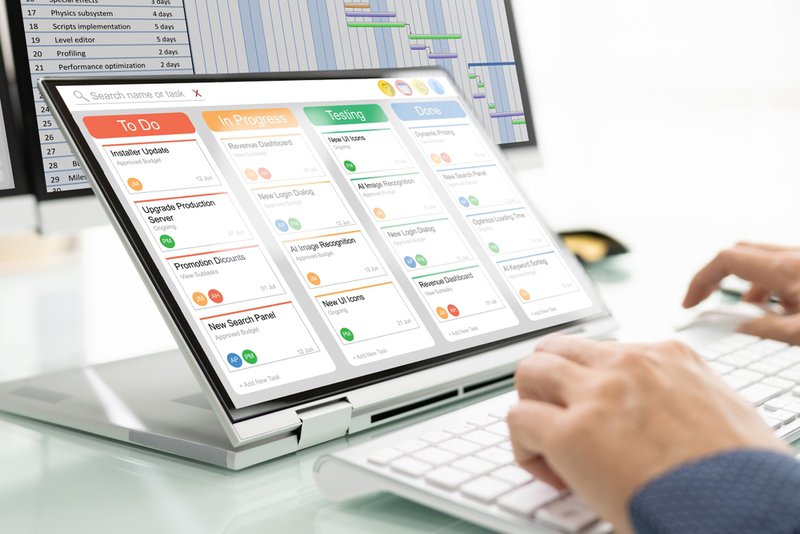
FSM software will generally have the following features:
- Integration with scheduling and dispatch capabilities to assign jobs to the most appropriate technicians.
- Inventory management to ensure technicians have the necessary parts and equipment.
- Customer communication tools to provide updates and collect feedback.
- Mobile apps that allow technicians to access job details, update statuses and log expenses.
- The ability to track vehicle performance in real time, optimize routes to minimize fuel costs and monitor vehicle conditions.
- Reporting and analytics to identify areas for improvement and make data-driven decisions.
Using FSM software helps improve first-time fix rates. It also reduces service call durations and increases technician productivity. What’s more, FSM software enhances customer satisfaction by providing better communication throughout the service process.
Finally, the data and insights generated by the software can help home services companies make more informed decisions about resource allocation, pricing and overall business strategy.
Accounting and Invoicing Software
Accounting and invoicing software is a crucial investment for home services companies that want to improve their financial operations and drive long-term business success. These tools streamline financial management, improve billing and invoicing processes and provide valuable financial insights to support business growth.
Key features typically include:
- Invoice creation and customization
- Automated billing and payment processing
- Expense tracking and management
- Payroll and tax preparation
- Financial reporting and analytics
- Integration with other business systems such as CRM and scheduling software
The benefits are significant. It helps improve cash flow through timely and accurate invoicing and a streamlined payment collection process. The software also simplifies tax preparation and compliance, which reduces the administrative burden on business owners. In addition, the software’s financial data can help home services companies make more informed decisions about pricing, resource allocation and overall business strategy.
Examples of popular accounting and invoicing software include QuickBooks, FreshBooks and Xero. These solutions often offer mobile apps and integrations with other business tools to create a comprehensive financial management platform.
Key Features To Look For
We’ve already mentioned a few of these key features in the above home services software solutions. Here’s why it’s essential to ensure the software you choose includes integration, mobile access, customization and reporting capabilities.
Integration Capabilities
Integration between software functions is crucial for home services businesses because it allows systems to communicate and share data seamlessly. This interconnectivity enables greater efficiency and improved accuracy while eliminating task duplication and reducing data entry. It also facilitates comprehensive customer insights.
For example, integrating a CRM system with scheduling and dispatch software ensures that customer information, job details and technician availability are all accessible in one place. Once technicians are assigned a job, they can easily access the client details, location and job spec. This simplifies and streamlines preparation, schedules and communication with clients if needed.

When customer details and records are accessible in a single hub for finance, sales agents and support staff, everyone is on the same page as they assist or follow up with customers. Similarly, integrating accounting software with your CRM system streamlines invoicing, payment processing and financial reporting. You can then easily track outstanding payments and automate follow-ups.
Mobile Accessibility
Software with mobile accessibility is a must-have for home services technicians and sales reps who often work remotely or in the field. Mobile-friendly software and apps deliver job assignments and customer information through smartphones and tablets. Technicians can update job statuses and log time and expenses on the go.
Such benefits improve both accuracy and responsiveness. They also reduce paperwork and enable real-time communication between the field and the office.
In addition, mobile accessibility empowers sales teams to provide on-site presentations, generate quotes, share documents and process payments directly with customers. Investing in home services software with strong mobile capabilities will boost productivity and give your mobile workforce the tools it needs to succeed.
Customization and Scalability
Home services businesses often have unique workflows, processes and requirements that can vary significantly from one company to another. Customizable software that can be tailored to your business’s specific needs is essential to maximize the value of your technology investment. This might include the ability to configure user roles, customize reporting dashboards or integrate with industry-specific tools.
What’s more, as companies grow, their software should scale accordingly to accommodate increased users, transactions and data. Software with robust customization and scalability features enables businesses to adapt their technology solutions as operations evolve. As a result, they’ll enjoy long-term efficiency and competitiveness.
Reporting and Analytics
Comprehensive reporting and analytics capabilities provide the data-driven insights needed to make informed decisions and drive continuous improvement. Robust software should offer a range of reporting options, from standard financial statements and sales performance metrics to more advanced analytics on customer trends, technician productivity and operational efficiency.
These insights enable home services companies to identify areas for optimization and allocate resources more effectively. They can also develop strategies to enhance customer satisfaction and profitability.
Additionally, data analytics and reports give sales reps key metrics such as lead generation, conversion rates, average order values and customer retention. Detailed breakdowns of sales by region, customer segment or product line further allow reps to identify their strongest and weakest areas. By closely tracking these metrics, reps can quickly identify trends, pinpoint areas for improvement and adjust sales strategies as needed.
Reporting can reveal which marketing campaigns or lead sources generate the most qualified leads. With this data, sales and marketing can focus on the high-performing channels and allocate resources accordingly. Similarly, analytics can help identify underperforming products or services.
Investing in software with powerful reporting and analytics features is key to gaining a competitive advantage and staying ahead of market demands.
Choosing the Right Software for Your Home Services Business
When choosing the right software for your home services business, follow a structured process to ensure you select a solution that aligns with your specific needs and goals. Consider the following key steps:

1. Assess Your Business Needs
To choose the right software, you must first thoroughly understand your business’s unique requirements. Take time to identify the pain points, operational challenges and inefficiencies you’re currently facing.
Consider factors such as your company size, industry, growth plans and the specific workflows and processes the software needs to support. Clearly defining your business needs will help you evaluate software options more effectively. It will also ensure you invest in a solution that provides the greatest value.
2. Research and Evaluate Software Options
With your business needs in mind, research the various software solutions available in the market. Compile a list of potential options and carefully evaluate each one based on factors such as features, functionality, ease of use, integration capabilities and customer reviews.
Pay close attention to how well the software aligns with your specific requirements and whether it can address your identified pain points. It’s also important to consider the vendor’s reputation, financial stability and commitment to ongoing product development and support.
3. Assess the Budget and ROI
Once you’ve narrowed down your software options, it’s time to evaluate the financial implications. Carefully analyze the pricing structures, subscription models and any additional costs associated with implementation, training and maintenance.
Determine the total cost of ownership (TCO) and assess the potential return on investment (ROI) that each solution can provide. This may involve calculating the expected improvements in productivity, efficiency and revenue that the software can deliver. Balancing the software’s cost with the anticipated benefits will help you make a more informed decision.
4. Conduct Trials and Demos
Before making a final decision, it’s crucial to test the software in a real-world environment. Arrange for trials, demos or proof-of-concept projects to evaluate the software’s performance, usability and compatibility with your existing systems and workflows.
This hands-on experience will help you identify any potential issues or limitations. More importantly, it will also ensure the software can deliver the expected functionality and user experience.
5. Seek Feedback and References
Gather input from your team members who will use the software on a regular basis. Ensure you understand their perspectives, concerns and preferences so the chosen solution meets their needs.
In addition, reach out to the software vendor’s existing customers and request references. Speaking with other home services businesses that have successfully implemented the software can provide valuable insights into its real-world performance, support quality and overall customer satisfaction.
6. Develop an Implementation Plan
Once you’ve selected the software, work closely with the vendor to develop a comprehensive implementation plan. Let’s dig deeper into this critical step.
Implementation and Training
To ensure a smooth transition to your new or upgraded system and minimize disruptions, consider the following guidelines:

Planning for Implementation
Develop a realistic timeline for the rollout of the new system, including key milestones and deadlines. Allocate appropriate resources, such as project managers, IT staff and subject matter experts. Define clear roles and responsibilities for the implementation team and end-users.
Your plan should also stipulate a strategy for data migration and system integration:
- Assess the data requirements and determine how you’ll migrate existing data to the new system.
- Identify any necessary integrations with your current software, databases or other systems.
- Test the data migration and integration processes thoroughly to minimize disruptions.
It’s also important to establish clear governance structures to manage the software’s usage, updates and security. Develop a change management strategy to address any resistance or concerns from employee. Be sure to clearly communicate the benefits of the new home services software.
Training Your Team
To optimize your ROI from the new system, your employees need to know how to get every benefit possible from the upgraded sales and operational tools. Develop a robust training plan to educate end-users on the new software’s features and functionalities. Offer ongoing support and resources like user manuals, help desk assistance and regular refresher sessions.
Providing a repository of on-demand resources, such as tutorials and user guides, allows team members to find help and solve problems as needed. This also fosters an environment of self-sufficiency and ongoing improvement. Encourage user feedback and continuously optimize and update the training and support programs.
Overcoming Common Challenges
Not everyone on your team may be as excited as you are about the changes to upgrade your home services software. A phased rollout can ease overwhelm and make it easier for everyone to adapt. What’s more, clear communication, comprehensive training and buy-in from key stakeholders can create a positive attitude toward new system adoption.
Other challenges that could hinder the transition to your improved system may include data migration issues, underestimating the time and resources required, and a lack of user adoption.
Work closely with the software vendor to plan, execute and test the migration process. Implementing new business software often takes longer and requires more effort than expected. Be sure to build in buffer time and allocate sufficient resources to stay on track.
Define key performance indicators (KPIs) to track the software’s impact on your business objectives. Regularly review the software’s usage, adoption rates and the realization of expected benefits. If the new software isn’t user-friendly or doesn’t meet employees’ needs, they may continue to use old methods. So, involve users in the selection and implementation process to improve adoption. Continuously optimize the software’s configuration and processes based on user feedback and performance data.
By considering these factors during the software implementation planning process, you can increase the chances of a successful rollout. Specifically, you’ll minimize disruptions to your business operations and maximize the long-term value of your tech investment.
Future Trends in Home Services Software
Just as the home services industry continues to evolve, so does the software that supports it. These are the trends to watch:

Emerging Technologies
Emerging technologies are rapidly transforming the home services industry with new capabilities to streamline operations and enhance the customer experience. One major shift is the rise of smart home technology.
For instance, Internet of Things (IoT) enables remote monitoring and predictive maintenance of home systems, which reduces the need for reactive repairs. Home improvement businesses can offer customers advanced connected devices, intuitive control systems and integrated home automation features. This level of technological integration creates a more compelling and future-proof value proposition.
Through data analytics and AI capabilities, home improvement providers can gain a deeper understanding of consumer behaviors, preferences and pain points. Such intelligence can inform more targeted marketing, personalized product recommendations and optimized service delivery.
What’s more, augmented reality can equip technicians with real-time access to data and step-by-step instructions during service calls to improve first-time fix rates. Meanwhile, blockchain technology is introducing new models for secure, transparent transactions. These cutting-edge software solutions create efficiencies, boost productivity and unlock new revenue streams for home services companies.
Evolving Customer Expectations
Homeowners today have higher expectations than ever. They desire seamless, on-demand scheduling, real-time job status updates and personalized, mobile-friendly experiences. Customers also want greater control and seek self-service options.
Augmented and virtual reality design and visualization tools enable homeowners to virtually try different design options before they commit to physical changes. This can apply to everything from paint colors to furniture layouts.
What’s more, sustainability and environmental impact have become key purchasing factors as homeowners look to work with providers that offer eco-friendly products and practices. Meeting these evolving expectations will require home services companies to invest in robust, customer-centric digital software that delivers convenience, transparency and customization.
Predictions for Industry Growth
The home services software market is poised for significant expansion in the coming years. Factors like an aging housing stock, increased home renovations and the rise of smart home technology are all driving greater demand for advanced home services solutions. More importantly, consumers expect convenient and sophisticated solutions and high-tech propositions that “wow” them.
Advanced analytics enable providers to better target high-potential customer segments and market their services more effectively. As the industry becomes more competitive, the home services companies that can deliver exceptional, tech-enabled experiences will be best positioned to capture a larger share of this expanding market.
Navigate the Evolving Home Services Landscape With Confidence
The home services industry is undergoing rapid transformation. Customers demand seamless, technology-driven experiences. To stay competitive, home services businesses must adopt innovative solutions that streamline workflows, enhance customer relationships and deliver measurable results.
Investing in the right home services software can help businesses empower their teams to work more efficiently. Ingage is a comprehensive content management and collaboration platform that can hugely benefit your sales and marketing teams.
With Ingage, teams can create visually appealing presentations, streamline workflows and improve team alignment, all from a single, user-friendly interface. Schedule a free demo today and let us help you find the right software options for your unique business.